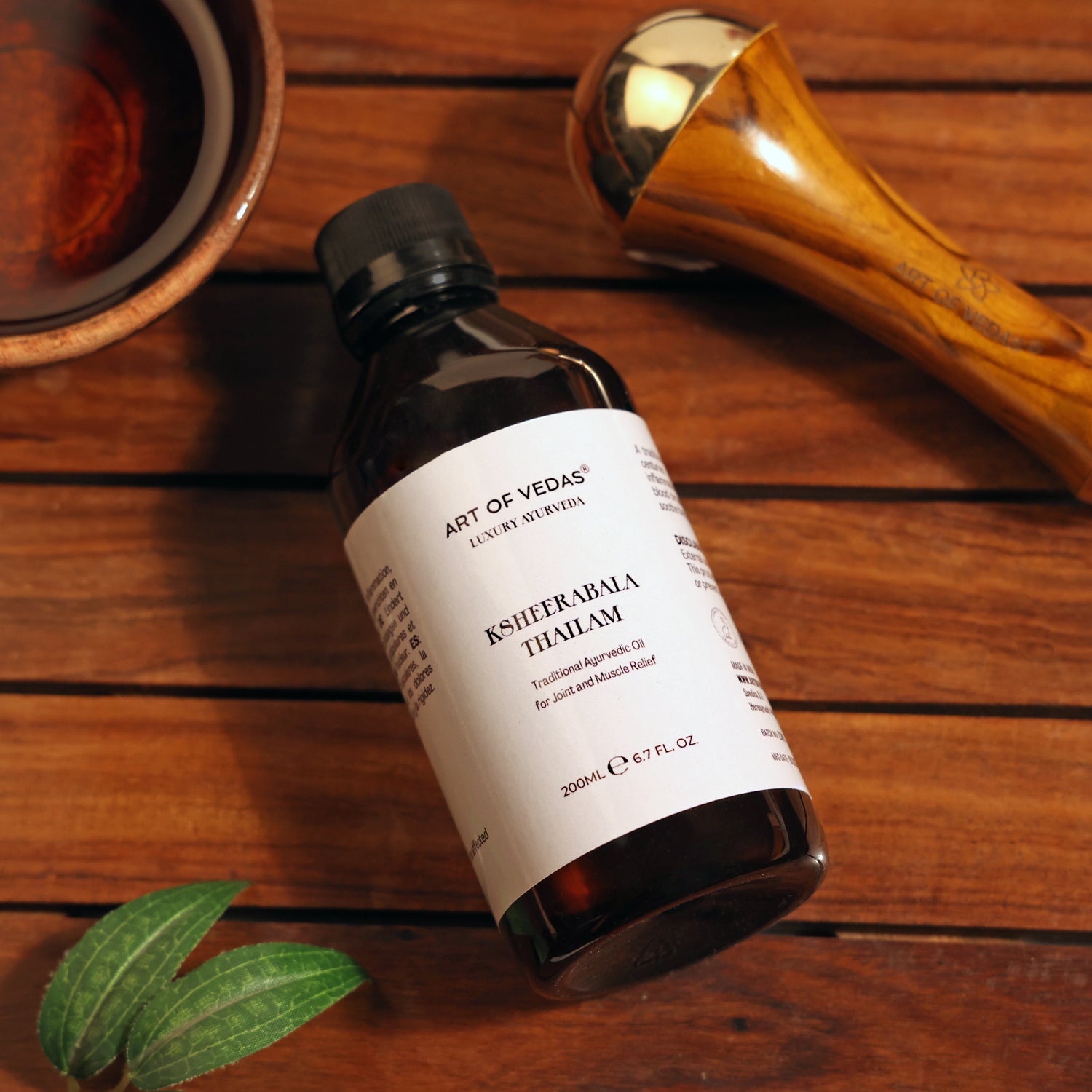

Ksheerabala Thailam

(2)

Klassisches Ayurvedic Nervenöl

Ab €21,00

€105,00 l

Ksheerabala Thailam ist eine klassische Ayurvedic-Formulierung, die im Ashtanga Hridayam und Sahasrayogam dokumentiert ist. Dieses elegante Öl mit drei Zutaten – Bala (Sida cordifolia), Kuhmilch und Sesamöl – wird in der Ayurveda traditionell als Nervenstärkungsmittel angesehen. Hergestellt nach der Ksheerapaka-Methode (Milchverarbeitung), bietet Ksheerabala eine kühlende, beruhigende Wirkung, die es von wärmenden Ölen wie Mahanarayana unterscheidet. Besonders geschätzt für Padabhyanga (Fußmassage) als Teil eines abendlichen Entspannungsrituals.
Nettogehalt

ZUTATEN

Sesamum Indicum (Sesam) Samenöl, Sida Cordifolia (Bala) Wurzelextrakt, Cow's Milk (Ksheera)

Ksheerabala Thailam

Ab €21,00

€105,00 l

Ab €21,00

€105,00 l
Ayurvedic thailam - Ksheerabala Thailam - Ayurvedic Massage Oil - ayurvedic wellness by Art of Vedas

Ksheerabala Thailam Vorteile

Ksheerabala Thailam nimmt einen herausragenden Platz in der Ayurvedic-Tradition als klassisches Nervenstärkungsmittel-Öl ein. Sein Name offenbart sein Wesen: Ksheera (Milch) und Bala (Sida cordifolia, bedeutet "Stärke") kombiniert in Thailam (Öl). Diese einfache, aber kraftvolle Kombination wird seit über tausend Jahren für ihre beruhigenden und nährenden Wirkungen auf das Nervensystem geschätzt.

Die Formulierung ist im Ashtanga Hridayam dokumentiert, verfasst vom großen Arzt Vagbhata, und in Sahasrayogam, dem umfassenden Kerala-Rezeptbuch mit über 1.000 klassischen Zubereitungen. Klassische Gelehrte schreiben seine Entdeckung der Öltherapie-Tradition Keralas zu, wo Praktiker beobachteten, dass das Kochen der Bala-Wurzel in Milch vor der Verarbeitung in Sesamöl sowohl die Wirksamkeit als auch die Sanftheit erhöhte.

Was Ksheerabala von anderen klassischen Thailams unterscheidet, ist sein Sheeta Virya – eine kühlende thermische Eigenschaft. Während Mahanarayana Thailam wärmend ist und sich am besten für kalte Jahreszeiten und sportliche Erholung eignet, bietet Ksheerabala eine sanfte, kühlende Wirkung, die sowohl Vata- als auch Pitta-Doshas beruhigt. Dies macht es besonders geeignet für Menschen mit empfindlicher Konstitution, in wärmeren Monaten oder wenn Entspannung statt Belebung gesucht wird.

In der Ayurvedic-Pharmakologie wird Ksheerabala sowohl als Balya (stärkend) als auch als Medhya (unterstützend für geistige Klarheit) klassifiziert. Das Bala-Kraut nährt Majja Dhatu – die Gewebeschicht, die mit dem Nervensystem und dem Knochenmark verbunden ist – während die Milchverarbeitung (Ksheerapaka) die Weichheit und die eindringende Qualität des Öls verbessert.

Traditionell geeignet für:

  • Padabhyanga – Fußmassage vor dem Schlafengehen als Teil des abendlichen Rituals
  • Shirodhara – die klassische Stirn-Ölfluss-Therapie
  • Abhyanga – Ganzkörpermassage für Vata-Konstitution
  • Kopfmassage zur Beruhigung eines überaktiven Geistes
  • Professionelle Panchakarma-Therapien
  • Tägliche Selbstpflege für Menschen mit Stress oder Unruhe

Wie man Ksheerabala Thailam verwendet

Für Padabhyanga (Abendliche Fußmassage):

Dies ist vielleicht die beliebteste Anwendung von Ksheerabala Thailam – ein einfaches Ritual vor dem Schlafengehen, das in indischen Haushalten seit Generationen praktiziert wird.

  1. Erwärmen Sie eine kleine Menge Öl, indem Sie die Flasche für einige Minuten in warmes Wasser stellen
  2. Setzen Sie sich bequem hin und tragen Sie das Öl auf beide Füße auf
  3. Massieren Sie jeden Fuß 5–10 Minuten lang mit kreisenden Bewegungen um Knöchel und Fersen
  4. Drücken Sie sanft entlang der Fußsohle und achten Sie dabei auf das Fußgewölbe
  5. Massieren Sie zwischen den Zehen
  6. Tragen Sie anschließend leichte Baumwollsocken, um die Bettwäsche zu schützen
  7. Lassen Sie das beruhigende Ritual Sie auf einen erholsamen Schlaf vorbereiten

Für Abhyanga (Ganzkörpermassage):

  1. Erwärmen Sie das Öl auf eine angenehme Temperatur
  2. Beginnen Sie an der Kopfhaut und tragen Sie das Öl auf den Scheitel auf
  3. Gehen Sie mit sanften kreisenden Bewegungen zum Gesicht, den Ohren und dem Nacken über
  4. Tragen Sie das Öl mit langen Strichen an den Gliedmaßen und kreisenden Bewegungen an den Gelenken auf den Körper auf
  5. Massieren Sie den Bauch sanft im Uhrzeigersinn
  6. Beziehen Sie die Fußsohlen mit ein – sie gelten als wichtige Punkte im Ayurveda
  7. Lassen Sie 20–30 Minuten für die Aufnahme
  8. Anschließend mit einer warmen Dusche oder einem Bad fortfahren

Für Shiro Abhyanga (Kopfmassage):

Tragen Sie warmes Öl auf die Kopfhaut auf und massieren Sie es 10–15 Minuten sanft ein. Diese Praxis wird traditionell empfohlen, um geistige Unruhe zu beruhigen und einen gesunden Schlaf zu fördern.

Empfohlene Häufigkeit:

Für allgemeines Wohlbefinden 2–3 Mal pro Woche. Für Personen mit Stress oder Schlafproblemen wird traditionell eine tägliche Fußmassage vor dem Schlafengehen empfohlen. Während der Vata-Zeit (Herbst und früher Winter) unterstützt eine häufigere Anwendung das Gleichgewicht.

Wichtig:

  • Nur zur äußerlichen Anwendung
  • Sanft erwärmen – nicht in der Mikrowelle erhitzen oder überhitzen
  • Vorsicht bei Dusche oder Bad, da Öl Oberflächen rutschig machen kann
  • Bei Schwangerschaft konsultieren Sie vor Beginn einer neuen Anwendung Ihren Arzt

Klassische Ayurveda Referenz

Ksheerabala Thailam ist in den grundlegenden Ayurvedic-Texten Ashtanga Hridayam (Vagbhata) und Sahasrayogam, dem umfassenden Kerala-Formular, dokumentiert. Die Sushruta Samhita verweist ebenfalls auf Zubereitungen mit dieser Kombination von Inhaltsstoffen.

Sanskrit: क्षीरबला तैलम् (Kṣīrabalā Tailam)

Der Name leitet sich ab von: Kṣīra (क्षीर) bedeutet Milch, Bala (बला) bedeutet Stärke (bezieht sich auf Sida cordifolia) und Tailam (तैलम्) bedeutet Öl.

Diese Formulierung wird in der Ayurvedic-Pharmakologie wie folgt klassifiziert:

Rasa (Geschmack): Madhura (süß)

Guna (Eigenschaft): Snigdha (ölig), Guru (schwer), Mridu (weich)

Virya (Wirkstärke): Sheeta (kühlend)

Vipaka (Nachverdauungseffekt): Madhura (süß)

Dosha: Beruhigt hauptsächlich Vata; balanciert auch Pitta. Kann Kapha bei Übermaß erhöhen.

Karma (Wirkungen): Balya (kräftigend), Brimhana (nährend), Vatahara (Vata-beruhigend), Medhya (unterstützt geistige Klarheit)

Dhatu-Zugehörigkeit: Majja (Nervengewebe), Asthi (Knochengewebe), Mamsa (Muskelgewebe)

Klassische Texte empfehlen Ksheerabala Thailam speziell für Vatavyadhi (Vata-Erkrankungen), als nervenstärkendes Tonikum und für Panchakarma-Therapien einschließlich Abhyanga, Shirodhara, Pizhichil (Ölbad) und Basti karma.

Diese Informationen stammen aus klassischen Ayurvedic-Texten zu Bildungszwecken. Konsultieren Sie einen qualifizierten Ayurvedic-Praktiker oder Gesundheitsdienstleister für personalisierte Beratung.

Learn More About Ksheerabala Thailam

What is Ksheerabala Thailam and what makes it different from other Ayurvedic massage oils?

Ksheerabala Thailam is one of the simplest yet most revered classical Ayurvedic formulations, consisting of just three primary ingredients: Bala herb (Sida cordifolia), cow's milk, and sesame oil. Its name directly reflects this composition — "Kshira" meaning milk and "Bala" meaning the strengthening herb.

What makes Ksheerabala Thailam unique is its cooling-to-neutral thermal nature. While most traditional Ayurvedic massage oils are warming, the milk processing in Ksheerabala creates a gentler, more soothing formulation. Classical texts including the Ashtanga Hridayam (in the Vatarakta Chikitsa chapter) and Sahasrayogam describe this oil as particularly nourishing for the nervous system.

Key characteristics that set it apart:

The Bala herb (Sida cordifolia) is traditionally known as a nervine tonic — its very name means "strength" in Sanskrit. Combined with the nourishing properties of milk and the deep-penetrating quality of sesame oil, Ksheerabala Thailam offers:

  • Nervous system nourishment — traditionally considered the oil of choice for nerve-related discomfort
  • Cooling comfort — suitable for those who find warming oils too intense
  • Calming properties — widely used in Shirodhara therapy and sleep-supporting rituals
  • Versatility — appropriate for both Vata and Pitta constitutional tendencies
What is the difference between Ksheerabala Thailam, Mahanarayana Thailam, and Dhanwantharam Thailam? Which should I choose?

These three oils represent different branches of the Ayurvedic Thailam tradition, each with distinct purposes and properties. Understanding their differences helps you select the right oil for your needs.

When to choose Ksheerabala Thailam:

  • You experience nerve-related discomfort (tingling, numbness, sensitivity)
  • You're seeking support for sleep and relaxation
  • You have a Pitta tendency or find warming oils too intense
  • You want an oil suitable for head massage or Shirodhara
  • You prefer a gentler, more soothing massage experience
  • Summer months or warm climates

When to choose Mahanarayana Thailam:

  • Post-exercise muscle recovery
  • Joint stiffness and discomfort
  • Cold weather or Vata seasons (autumn/winter)
  • You prefer a warming, deeply penetrating oil
  • Full-body Abhyanga focusing on musculoskeletal system

When to choose Dhanwantharam Thailam:

  • Pregnancy massage (from 7th month onwards)
  • Postnatal recovery (Sutika Paricharya)
  • General weakness or recovery from illness
  • Building strength and nourishment

Can they be used together?

Yes, in Ayurvedic practice, different oils may be used on different body areas or at different times. For example, Ksheerabala for head massage and Mahanarayana for the body. However, for simplicity in home practice, choose the oil that best matches your primary concern.

Can Ksheerabala Thailam help with sleep? How should I use it for relaxation and better rest?

Ksheerabala Thailam has been traditionally valued for its calming properties, and in Ayurvedic practice, it is one of the preferred oils for supporting restful sleep. The cooling nature of this oil, combined with the nervine properties of Bala herb, creates a deeply soothing experience.

Pada Abhyanga (foot massage) for sleep:

This is the most accessible and effective method for home use:

  1. Warm a small amount of oil (5-10ml) to a comfortable temperature — slightly above body warmth
  2. Sit comfortably and apply the oil to the soles of your feet
  3. Massage in circular motions, paying attention to the center of each sole
  4. Gently press and massage each toe, the ankles, and the spaces between toes
  5. Continue for 5-10 minutes before bed
  6. Wear old cotton socks to protect your bedding and allow the oil to absorb overnight

Shiro Abhyanga (head massage) for calming:

For deeper relaxation, add a gentle head massage:

  1. Warm a small amount of oil
  2. Apply to the crown of the head (Brahmarandhra point)
  3. Using gentle circular motions, massage the entire scalp
  4. Include the temples, behind the ears, and the base of the skull
  5. Leave for 30-60 minutes before washing, or overnight with a towel on your pillow

Tips for best results:

  • Perform the massage in a calm, dimly lit environment
  • Avoid screens for at least 30 minutes after your massage
  • Make it a consistent ritual — the body responds well to routine
  • The traditional recommendation is to use for 21 consecutive days to establish benefits
Is Ksheerabala Thailam suitable for head massage, facial application, and hair care?

Yes, Ksheerabala Thailam is well-suited for head application — in fact, this is one of its traditional strengths. Its cooling nature and nervine properties make it particularly appropriate for scalp and head use in ways that warming oils are not.

Head and scalp application:

Ksheerabala Thailam is traditionally recommended for:

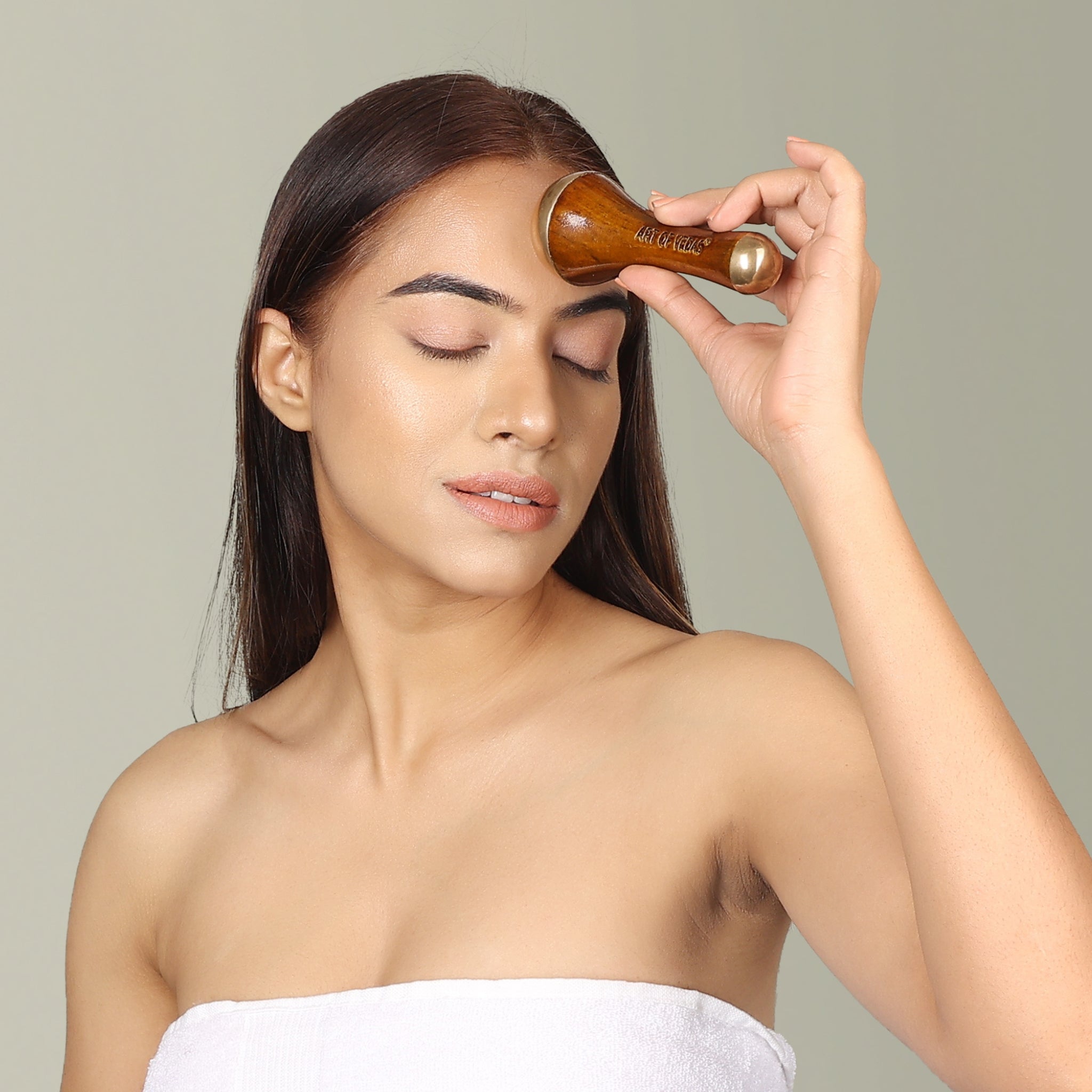
  • Shiro Abhyanga (head massage) — calming, grounding, supporting mental clarity
  • Shirodhara — the classical oil streaming therapy for deep relaxation
  • Shiro Pichu — applying oil-soaked cotton to the crown for sustained nourishment
  • Supporting scalp comfort, particularly for dry or sensitive scalps

The oil's cooling quality makes it particularly suitable for those who experience:

  • Tension or tightness in the head and neck
  • Sensitivity to heat or warming sensations
  • Stress-related scalp concerns

Facial application:

Ksheerabala Thailam can be used on the face, particularly for:

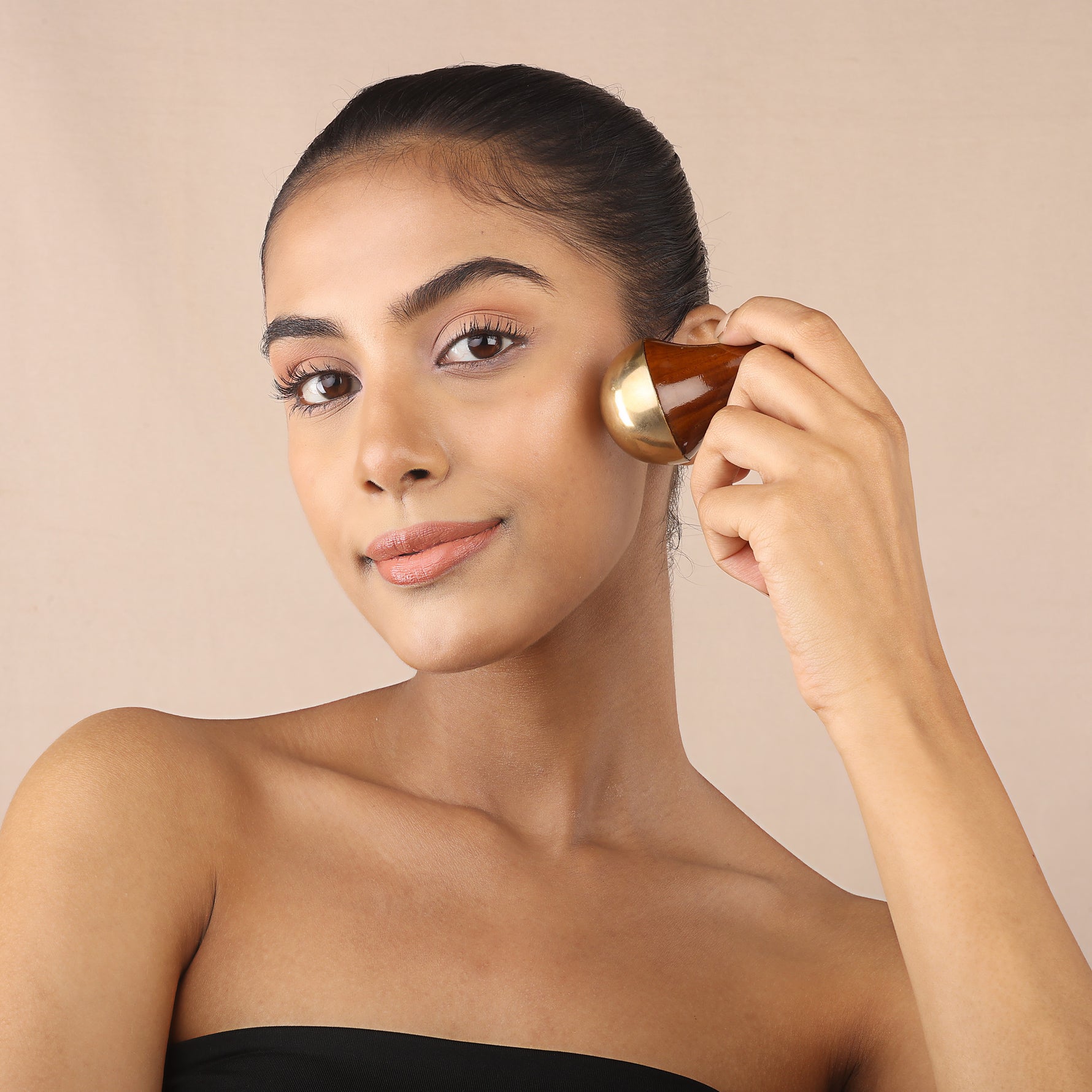
  • Gentle facial massage focusing on relaxation
  • Supporting comfort around the temples and jaw area
  • Those with Vata or Vata-Pitta skin tendencies (dry, sensitive)

However, it is not formulated as a dedicated facial oil. For daily facial care, Art of Vedas offers specialised facial oils better suited for skincare routines.

Hair oiling:

While not primarily a hair oil, Ksheerabala Thailam can support hair health through:

  • Occasional scalp treatments (weekly or fortnightly)
  • Pre-wash scalp massage to nourish roots
  • Supporting scalp comfort for those with dryness

For regular hair oiling, traditional hair-specific formulations may be more appropriate. However, if you're using Ksheerabala for nervous system support and wish to include your scalp, this is perfectly acceptable.

Application method for head/hair:

  1. Warm 10-15ml of oil to a comfortable temperature
  2. Part hair into sections and apply oil directly to scalp
  3. Massage gently in circular motions for 10-15 minutes
  4. Leave for minimum 30 minutes (or overnight)
  5. Wash with a gentle, natural shampoo
Can I use Ksheerabala Thailam during pregnancy? Is it safe for babies and children?

Pregnancy — Not Recommended

Ksheerabala Thailam is generally not recommended during pregnancy. The Bala herb (Sida cordifolia) contains active compounds including ephedrine-like alkaloids that require caution during pregnancy. While some traditional sources mention external use, we advise pregnant women to avoid this oil and instead choose pregnancy-specific formulations such as Dhanwantharam Thailam, which is traditionally formulated for use from the 7th month of pregnancy onwards.

If you are pregnant and wish to use any Ayurvedic oil, please consult with your healthcare provider or a qualified Ayurvedic practitioner who can assess your individual situation.

During breastfeeding: Consult your healthcare provider before use. If external application is approved, avoid the breast area close to feeding times.

For babies and children:

Ksheerabala Thailam can be used for children with appropriate precautions.

For babies under 6 months, this oil is generally not recommended. Please consult your paediatrician before using any herbal oil on very young infants.

For babies 6 months to 2 years, dilute the oil 1:1 with plain sesame oil. Use only 2-5ml for the massage. Apply very gently with light strokes only. Always perform a patch test 24 hours before first use.

For children 2 years and older, you can use the oil undiluted with gentle massage techniques. Use approximately 5-10ml depending on the child's size.

For infant and child massage: Always perform a patch test 24 hours before first use. Warm oil to body temperature (not hot). Use very gentle strokes with no deep pressure. Focus on feet, legs, and back. 5-10 minutes is sufficient for young children. Traditional practice includes baby foot massage before sleep to encourage restful nights.

When to avoid use on children: If the child has a fever or cold (the cooling nature may not be appropriate), if there are active skin infections or rashes, if there is a known sesame allergy, or if no patch test has been performed.

What are the potential allergies, side effects, or contraindications for Ksheerabala Thailam?

Ksheerabala Thailam is generally well-tolerated when used correctly, but as with any natural product, awareness of potential sensitivities is important.

Allergen information:

Sesame oil (primary base):

  • Sesame is classified as a major allergen under EU food regulations
  • If you have a known sesame allergy, do not use this product
  • Sesame allergies can cause skin reactions even with topical application

Cow's milk (processing ingredient):

  • While the milk is processed into the oil (not remaining as liquid dairy), trace compounds may be present
  • Those with severe dairy allergies should exercise caution
  • Perform a patch test if you have dairy sensitivities

Patch test procedure:

  1. Apply a coin-sized amount to your inner forearm
  2. Leave uncovered for 24 hours
  3. If redness, itching, burning, or rash develops, do not use the product
  4. No reaction = generally safe to proceed with full application

Potential side effects:

With external use:

  • Rare skin sensitivity in those with very reactive skin
  • Possible aggravation in Kapha-dominant individuals (heaviness, sluggishness) with excessive use
  • Slippery residue — take care when walking after foot application

Storage for safety:

  • Store in a cool, dry place away from direct sunlight
  • Keep cap tightly closed
  • Shelf life typically 2-3 years from manufacture
  • Discard if the oil develops an unusual smell or appearance
What is the correct way to apply Ksheerabala Thailam? How much should I use, how long should I leave it, and when is the best time?

Proper application technique enhances the benefits of Ksheerabala Thailam. Here's a comprehensive guide to getting the most from this classical formulation.

Warming the oil:

  • Heat the required amount in a small bowl placed in warm water (water bath method)
  • Target temperature: 38-40°C — comfortably warm, not hot
  • Never microwave — uneven heating can degrade the oil's properties
  • Test on your inner wrist before applying

Application technique:

For Abhyanga (full body massage):

  1. Apply oil to the crown of the head first (Brahmarandhra)
  2. Work down to face, ears, and neck with gentle strokes
  3. Use long strokes on limbs (toward the heart on return strokes)
  4. Circular motions on joints (shoulders, elbows, wrists, hips, knees, ankles)
  5. Clockwise circles on the abdomen
  6. Don't forget between fingers and toes
  7. End with the soles of the feet

For Pada Abhyanga (foot massage):

  1. Sit comfortably with one foot accessible
  2. Apply oil generously to the sole
  3. Use thumbs to massage the centre of the sole in circular motions
  4. Work the oil between each toe
  5. Massage the ankle and Achilles tendon area
  6. Repeat on the other foot
  7. Wear cotton socks if not washing immediately

After application:

  • For morning application: Follow with warm (not hot) water bath after absorption time
  • For evening application: Can leave overnight on feet and scalp
  • Use a gentle, natural soap if needed — avoid harsh cleansers that strip beneficial oils
  • Pat dry rather than vigorous rubbing

Special applications:

For ear comfort (Karna Purana):

  • Warm 2-3 drops to body temperature
  • Lie on your side
  • Apply drops into the ear canal
  • Remain lying for 5-10 minutes
  • Best performed under professional guidance initially

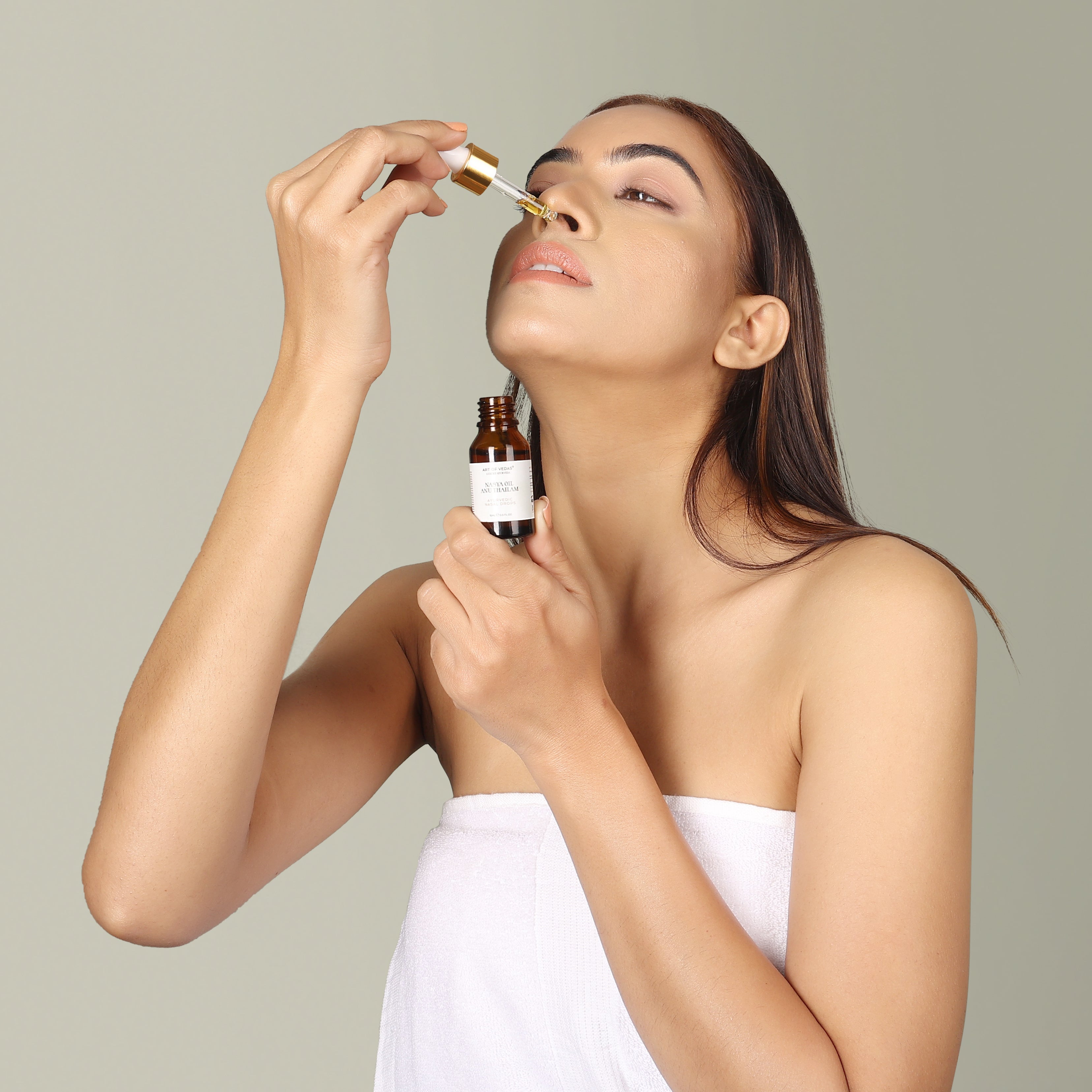
For nasal application (Nasya):

  • Only use Ksheerabala 101 (concentrated version)
  • 2 drops per nostril
  • Performed after facial steam
  • Professional supervision recommended